
February 16, 2026
Sedation Dentistry
Going to the dentist can be a stressful event for many people, especially those who fear pain, needles, or the sounds of dental equipment. Sedation dentistry is a great way to overcome these fears, enabling patients to undergo dental procedures with minimal pain. It provides two popular ways to conquer these fears: oral sedation and IV sedation. Each has its own benefits, depending on the patient’s needs and the type of procedure.
Understanding the differences between oral vs IV sedation dentistry can help you choose the right option for your dental appointment. Whether it is a routine check-up or a more invasive procedure, understanding what to expect from each type of sedation can help ensure a comfortable, relaxed treatment. Let’s look at the key differences to help you make the right choice for your needs.
What Is Oral Sedation?
Oral sedation is the procedure whereby you are asked to take a particular drug before the dental procedure. The drug will help to calm your nerves and relax your body, making you feel comfortable during the procedure. Oral sedation will take effect within 30-60 minutes, and the effects will last for a few hours, making it the best option for patients who require routine dental procedures or those who have moderate dental anxiety.
Oral sedation is the preferred option because the drug is taken orally, and there is no need to use needles. This makes it the best option for patients who fear needles. Oral sedation in Gallatin is mild to moderate and will not put patients to sleep, although they can fall into a light sleep. Patients will remain awake but feel relaxed and will not remember anything about the procedure.
What Is IV Sedation?
IV sedation, on the other hand, is delivered by a small IV line inserted into the arm. This allows the sedative to work much faster than oral sedation because it goes straight into the bloodstream. The level of sedation can be adjusted during the procedure, so your sedation dentist can tailor it to your needs.
IV sedation is commonly used for more complex procedures, such as tooth extraction, root canal treatment, or dental implants. Unlike oral sedation, which may leave patients conscious of their surroundings, IV sedation will make patients feel very relaxed or even make them lose consciousness, depending on the dosage. It is also important to remember that patients can still respond to verbal commands even when sedated, allowing the dentist to communicate with them during the procedure.
Which Is Right for You: Oral or IV Sedation?
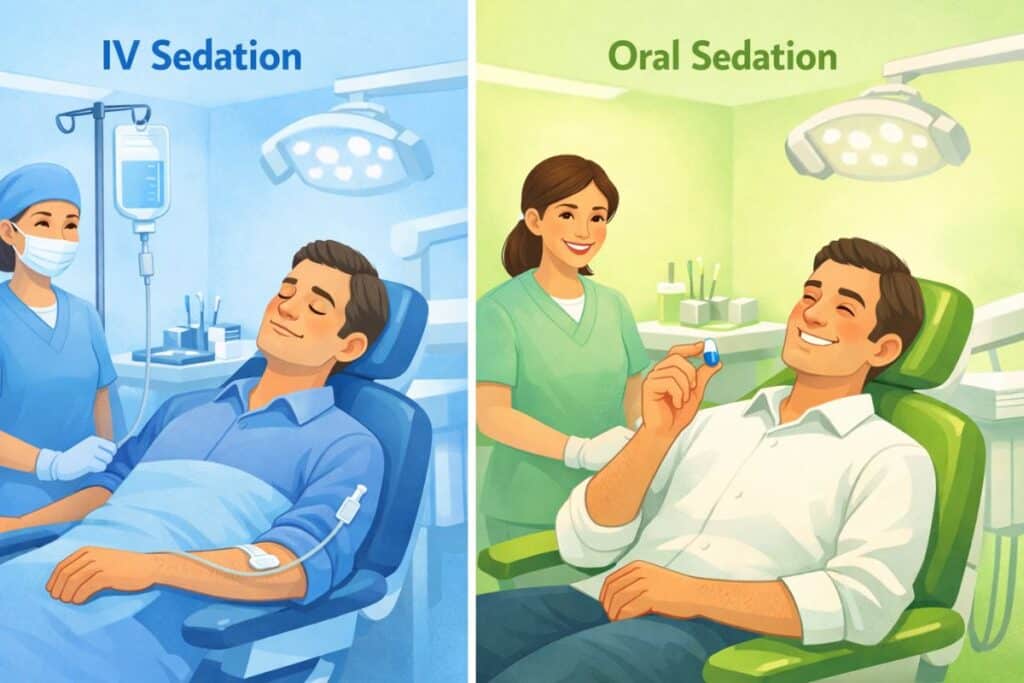
Whether you choose oral sedation or IV sedation will depend on your comfort level, the type of procedure you are having done, and your personal preferences. Some considerations to keep in mind when deciding which type of sedation will be most beneficial for you are listed below:
1. Type of Procedure
- Oral sedation may be sufficient for patients undergoing routine procedures such as cleanings or fillings.
- IV sedation may be more beneficial for patients undergoing more complex procedures, such as wisdom teeth removal or dental implant placement.
2. Anxiety Level
- If you are mildly anxious about your procedure but do not want the discomfort of dental work, oral sedation may be sufficient to calm your nerves.
- If you are severely anxious about dental procedures, IV sedation may be more beneficial in helping you relax.
3. Duration of the Procedure
- Oral sedation is usually considered for shorter, less invasive procedures. If you are going through a procedure that will take about an hour or two, oral sedation is usually the best option for you.
- IV sedation is usually the best option for longer procedures, allowing your dentist to adjust the sedation as needed.
4. Recovery Time
- With oral sedation, patients usually feel alert and awake a few hours after the procedure. However, they may feel drowsy for the rest of the day.
- IV sedation usually wears off quickly once the medication is stopped. However, it may take a little longer for the sedation to wear off.
Safety of Sedation Dentistry
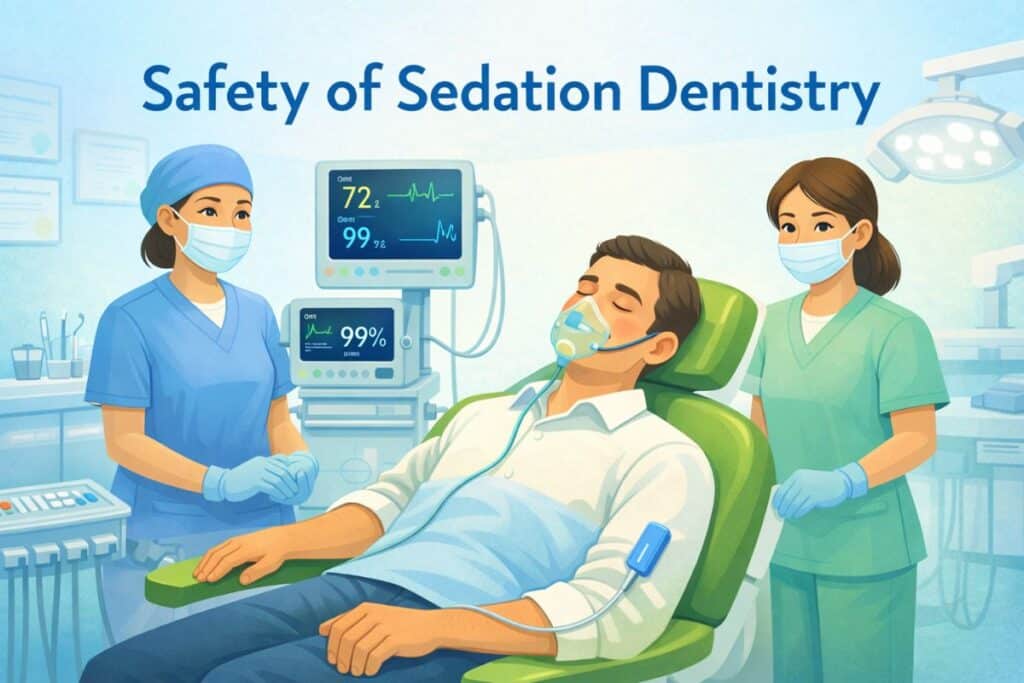
Sedation dentistry is a safe and successful way to make patients feel comfortable during dental procedures. Both oral and IV sedation techniques are closely monitored and adjusted according to the patient’s needs, ensuring a safe journey. Although sedation dentistry is a safe procedure, it is essential to understand the safety protocols involved and how your dentist will ensure your safety throughout the process.
Here’s what you need to know about the safety of sedation dentistry:
- Personalized Sedation Plans: Your sedation dentist will review your medical history and personal needs to determine the type of sedation that is best suited to you. Whether it is oral sedation or IV sedation, the procedure will be designed according to your comfort and safety.
- Continuous Monitoring: During the procedure, your dentist and team will monitor your vital signs, including heart rate, oxygen levels, and blood pressure, to ensure your safety.
- Minimal Risk: Sedation dentistry is a very safe procedure when conducted by a qualified professional. For most patients, sedation dentistry is a safe and effective way to deal with anxiety and discomfort. Your dentist will discuss any risks associated with the procedure in detail, depending on your health history.
- Post-Treatment Care: After the completion of your procedure, you will be closely monitored until the sedation effects are out of your system. If you undergo oral sedation, you will need to have a responsible adult with you to drive you home, but if you undergo IV sedation, the effects will be out of your system quickly, and you will still need to have someone with you after the procedure.
- Health-First Approach: Before sedation dentistry, your dentist will ensure you are physically ready for the procedure. If you have any oral health problems or overall health issues, they may be extra cautious or suggest a different form of sedation for your safety.
With these safety measures in place, sedation dentistry can provide a smooth, anxiety-free dental treatment for most patients. You are always free to ask your dentist any questions you may have about the sedation process and how it helps ensure your safety.
Making the Best Choice
At Sumner Dental Group, we are committed to helping you feel calm and comfortable throughout your dental treatment. If you have any questions about sedation dentistry or are ready to schedule a consultation, please do not hesitate to contact us. We will walk you through the sedation process and ensure your journey is as smooth and stress-free as possible.
If you are ready to move forward with your dental treatment, please contact Sumner Dental Group today to discuss your sedation options. Whether you are interested in oral sedation or IV sedation, we are here to make your visit comfortable, safe, and successful. Call today or visit our website to schedule an appointment with our sedation dentist in Gallatin!
Questions People Ask About Oral and IV Sedation
1. Is oral sedation the same as general anesthesia?
No, oral sedation keeps you relaxed but awake during your procedure, while general anesthesia puts you to sleep. Oral sedation is less invasive and does not require an IV.
2. How long does oral sedation take to work?
Oral sedation typically takes about 30-60 minutes to take effect. After that, you will feel calm and relaxed, but you will remain awake throughout the procedure.
3. Will I be unconscious with IV sedation?
IV sedation can make you feel deeply relaxed, and in some cases, it may cause you to drift into a light sleep. You can still respond to verbal cues from your dentist during the procedure.
4. Are there any risks associated with sedation dentistry?
Sedation dentistry is safe for most patients. However, risks can vary depending on your health and the type of sedation used. Your dentist will review your medical history to ensure you are a good candidate for sedation.
5. Can I drive after receiving oral sedation?
No, you should not drive after receiving oral sedation. The medication can make you feel drowsy, and you will need someone to drive you home after the procedure.
6. How long will it take to recover from IV sedation?
IV sedation usually wears off quickly after the procedure, but it may take a few hours to fully feel alert. It’s best to arrange for someone to accompany you to your appointment and drive you home afterward.
Recent Posts
Feb. 16, 2026
Oral vs. IV Sedation: What’s the Difference and Which Is Right for You?
Jan. 27, 2026
Daily Care Routine for Dentures: Cleaning & Storage Guide
Jan. 19, 2026
Speech & Dentures: Quick Fixes to Common Issues
Jan. 12, 2026
Top Tips for Eating Comfortably with New Dentures
Jan. 05, 2026
The Ultimate Guide to Dentures: Types, Process, Benefits & Care
Catagories
- Bad Breath (1)
- Cosmetic Dentist (2)
- Dental Bonding (1)
- Dental Checkups (6)
- Dental Crown (1)
- Dental Fillings (1)
- Dental Implants (21)
- Dental Insurance (2)
- Dental Sealant (3)
- Dental Veneers (6)
- Dentures (7)
- Emergency Dentistry (9)
- Gum Disease (2)
- Invisalign (5)
- Mouthguard (3)
- New Year (1)
- Oral Health (12)
- Periodontal Treatment (2)
- root canal (4)
- Sedation Dentistry (2)
- Sumner Dental Group (7)
- teeth whitening (8)
- Tooth Extractions (10)
- Uncategorized (0)
- Wisdom Tooth Extraction (1)