
March 6, 2023
Dental Implants
Are you missing one or more teeth? Are you tired of dealing with ill-fitting dentures that slip and slide when you’re eating or speaking? If so, dental implants may be the solution for you. They are a popular option for people who want to restore their smile and enjoy all the benefits of having strong, healthy teeth. But what exactly are dental implants, and how do they work? In this blog post, we’ll cover everything you need to know about dental implants – from their benefits and risks to the implant placement process and aftercare. So sit back, relax, and get ready to learn all about this life-changing procedure!
What Are Dental Implants?
Dental implants are artificial tooth roots that are surgically implanted into the jawbone. Once in place, they allow your dentist to securely attach new teeth to the implants. Implants can be used to replace a single tooth, several teeth, or all of the teeth in your mouth.
There are many benefits of dental implants, including:
• Increased Comfort
Unlike dentures and bridges, which can sometimes slip or rub against the gums, dental implants are rock-solid and won’t move around in your mouth.
• Improved Appearance
Dental implants look and feel just like your natural teeth. They also preserve the healthy bone in your jaw, which can keep your face looking younger.
• Enhanced Eating
With dental implants, you can bite and chew just like you would with your natural teeth. This can make it easier to eat the foods you love.
• Improved Speech
Slipping dentures can make it difficult to speak clearly. Dental implants will not slip, making it easier for you to be understood when you speak.
• Greater Convenience
Dental implants eliminate the need for special cleaning solutions and adhesives. And unlike dentures, they don’t need to be removed for cleaning. Just brush and floss as you would your natural teeth!
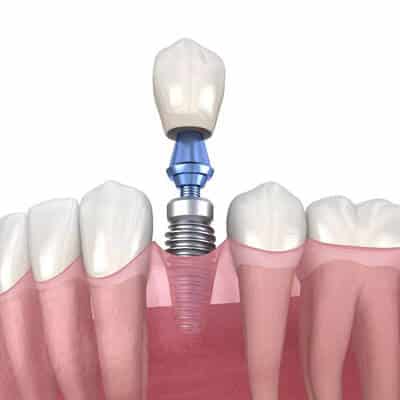
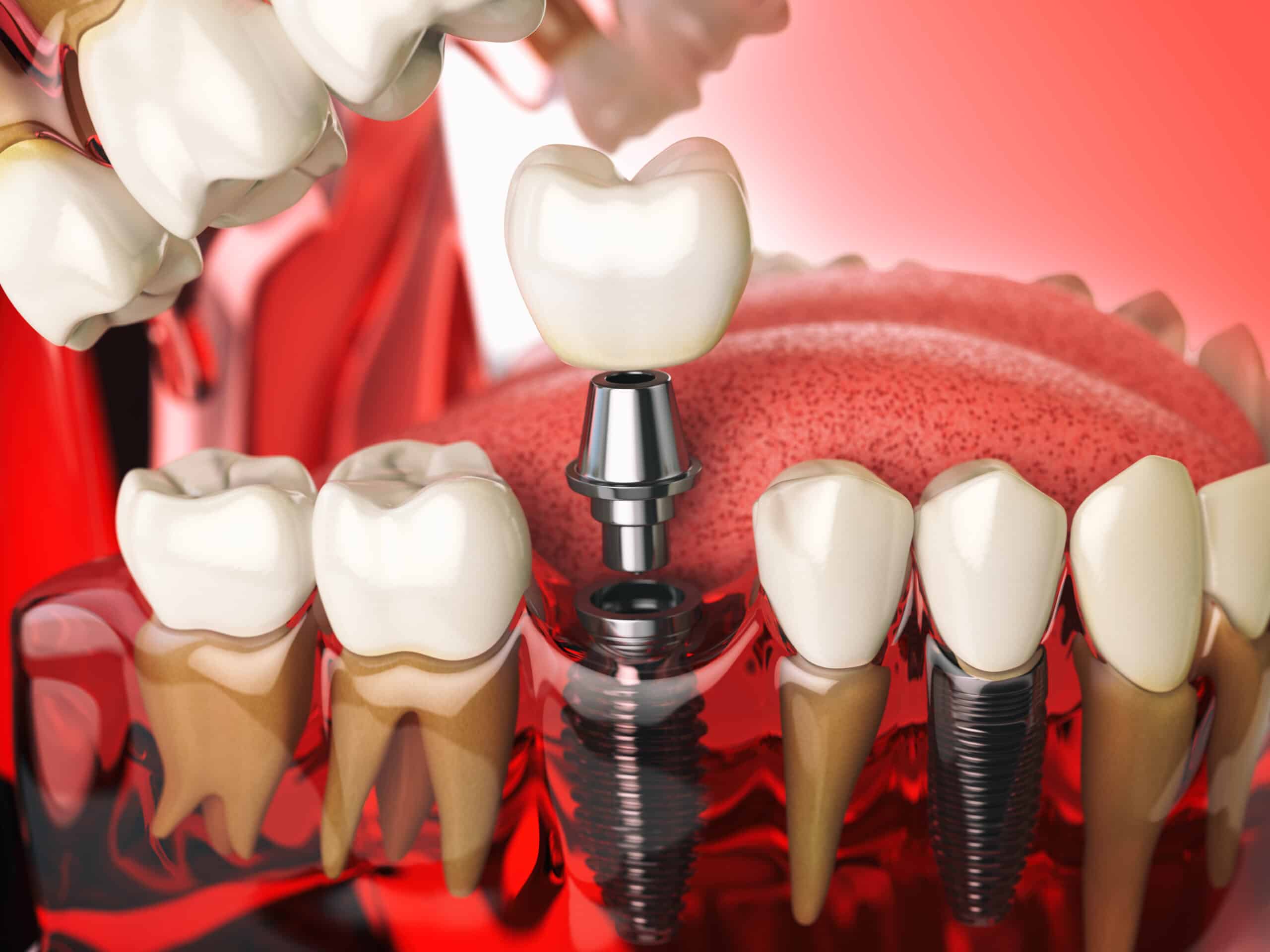
Dental Implant Anatomy
Dental implants are designed to provide a foundation for replacement teeth that look, feel, and function like natural teeth. The person who has lost teeth regains the ability to eat virtually anything and can smile with confidence, knowing that their teeth appear natural and that their facial contours will be preserved.
Dental implants are titanium posts that are surgically placed into the jawbone beneath the gums. As the jawbone heals, it grows around the implanted metal post, anchoring it securely in the jaw. The healing process usually takes between six weeks and three months. Once the implant has bonded to the jawbone, a small connector post — called an abutment — is attached to the post to securely hold a replacement tooth or crown.
Source: Gary R. O'Brien
Types Of Dental Implants
There are several types of dental implants currently available. The type of implant selected will depend on many factors, including the health of the patient’s jawbone, the number of teeth being replaced, and where in the mouth they are located. Your dentist can help you determine which type of dental implant is right for you.
Single tooth replacement
When it comes to single-tooth replacement, dental implants are often the best option. Not only do they look and function just like your natural teeth, but they also help to preserve the health of your jawbone. In addition, dental implants can last a lifetime with proper care, making them a great investment in your oral health.
After the implant has been placed, it will need to fuse with the jawbone. This process, known as osseointegration, can take several months. Once the implant has successfully fused with the jawbone, your implant dentist will then place a custom-made crown on top of the implant. The crown will be color matched to your natural teeth so that it blends in seamlessly. With proper care, your new dental implant can last a lifetime!
Multiple tooth replacement
Dental implants are an increasingly popular option for multiple tooth replacement. This is because they offer a number of advantages over other methods, such as dentures. These types of implants are permanently fixed in your jawbone, meaning they will not move around as dentures can. This provides a much more secure and comfortable fit. They look and function just like your natural teeth, so you can eat and speak normally. They also help to preserve the bone in your jaw, which can deteriorate with tooth loss.
If you are considering dental implants for multiple tooth replacement, be sure to consult with an implant dentist to see if you are a good candidate for this treatment.
Implanted dentures
Dental implants are a great option for people who have lost teeth. They are also a good choice for people who have teeth that are severely damaged or decayed. Implanted dentures can give you the look and feel of natural teeth.
There are two types of dental implants: endosteal and subperiosteal. Endosteal implants are placed in the jawbone, while subperiosteal implants are placed under the gum tissue but on top of the jawbone.
Before you decide to get dental implants, you will need to consult with your dentist to see if you are a candidate for this procedure. There are certain health conditions that may make you ineligible for dental implants, such as diabetes or osteoporosis.
If you are considering dental implants, be sure to ask your dentist about all of the risks and potential complications associated with this procedure.
The Bottom Line
Dental implants are a great way to restore your smile and improve your quality of life. With proper care, they can last for many years without any problems. Before getting dental implants, it’s important to understand the process, risks, and costs involved in the procedure. Hopefully, this article has provided you with some valuable information about what you should know before considering dental implants so that you can make an informed decision that’s right for you.
Recent Posts

Feb. 16, 2026
Oral vs. IV Sedation: What’s the Difference and Which Is Right for You?
Jan. 27, 2026
Daily Care Routine for Dentures: Cleaning & Storage Guide
Jan. 19, 2026
Speech & Dentures: Quick Fixes to Common Issues
Jan. 12, 2026
Top Tips for Eating Comfortably with New Dentures
Jan. 05, 2026
The Ultimate Guide to Dentures: Types, Process, Benefits & Care
Catagories
- Bad Breath (1)
- Cosmetic Dentist (2)
- Dental Bonding (1)
- Dental Checkups (6)
- Dental Crown (1)
- Dental Fillings (1)
- Dental Implants (21)
- Dental Insurance (2)
- Dental Sealant (3)
- Dental Veneers (6)
- Dentures (7)
- Emergency Dentistry (9)
- Gum Disease (2)
- Invisalign (5)
- Mouthguard (3)
- New Year (1)
- Oral Health (12)
- Periodontal Treatment (2)
- root canal (4)
- Sedation Dentistry (2)
- Sumner Dental Group (7)
- teeth whitening (8)
- Tooth Extractions (10)
- Uncategorized (0)
- Wisdom Tooth Extraction (1)